
How to Choose a Badminton Racket
By Athlete's Choice team · Last updated
Start with weight
Badminton rackets are sold in weight classes marked by a number followed by U. The lower the number, the heavier the racket. A 2U racket is about 90 to 94 grams, 3U about 85 to 89 grams, 4U about 80 to 84 grams and 5U about 75 to 79 grams, all without strings and grip. Heavier frames carry more momentum into a smash but tire the wrist sooner. Lighter frames are easier to swing quickly in defence and at the net.
Check the balance point
Balance describes where the racket feels heavy. Head-heavy rackets, usually with a balance point above about 295 mm, push more weight into the swing and suit smashing and clears. Head-light rackets, below about 290 mm, are fast to manoeuvre and suit doubles play and quick exchanges. Even-balance rackets sit in between and are the safest first choice when you are not sure what you prefer.
Shaft flex
A flexible shaft bends more on the swing and returns energy, which helps players who generate less racket-head speed. A stiff shaft needs a faster, more complete swing but rewards that effort with precision and control. Medium flex suits most players and is a good default.
Grip size
Grip sizes are shown as G followed by a number in many brands, where a higher number usually means a slimmer handle. G4 is a common medium size and G5 is slightly smaller. If you are between sizes, choose the smaller one: you can always build a handle up with an overgrip, but you cannot shave it down.
Strings and tension
Every racket frame lists a maximum recommended tension on the shaft or throat. Recreational players commonly string in the low to mid twenties in pounds, and stronger players string higher for more control. Higher tension gives a crisper feel but a smaller sweet spot. If a racket arrives pre-strung, it is ready to play straight away and is a sensible choice for beginners.
Quick comparison
| Player type | Weight class | Balance | Shaft |
|---|---|---|---|
| Beginner | 4U or 5U | Even | Flexible to medium |
| Improving club player | 3U or 4U | Even to slightly head-heavy | Medium |
| Attacking singles player | 3U | Head-heavy | Stiff |
| Doubles specialist | 4U | Head-light or even | Medium to stiff |
Match the racket to how you play
If you spend most of your time defending and driving flat, a head-light frame gets the racket back in position faster. If you win points with clears and smashes, head-heavy gives you more weight to work with. If you are not yet sure of your style, start with an even-balance 4U racket and see which part of the game feels difficult.
Before you buy
Check the weight class, balance, flex, grip size and whether the racket is strung. Our product pages list what is on the label for each model, and if something is missing you can ask us. Browse the rackets below or use our guided finder for a shortlist.
Badminton rackets in stock now
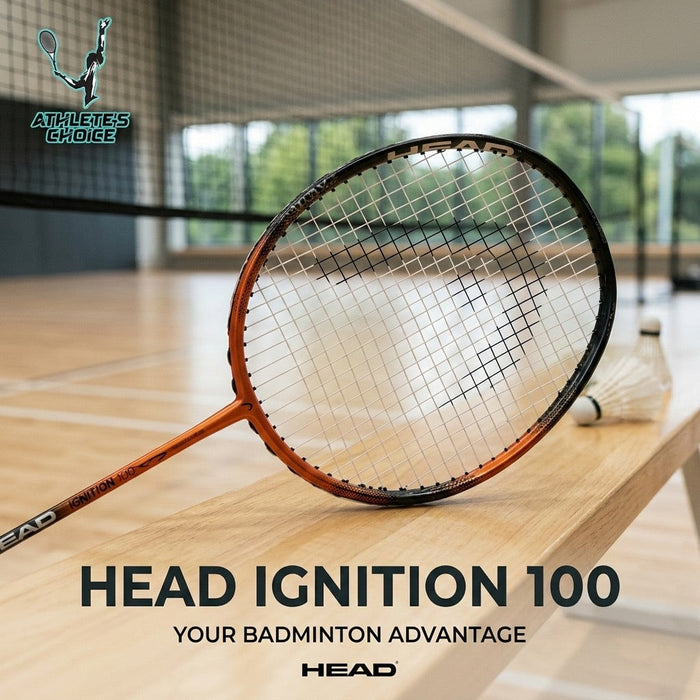
HEAD Ignition 100 Badminton Racket
Rs. 1,999.00

LI-NING Ignite 8 Badminton Racket
Rs. 3,800.00

Yonex Astrox 99 Play 3rd Gen Badminton Racket
Rs. 4,880.00
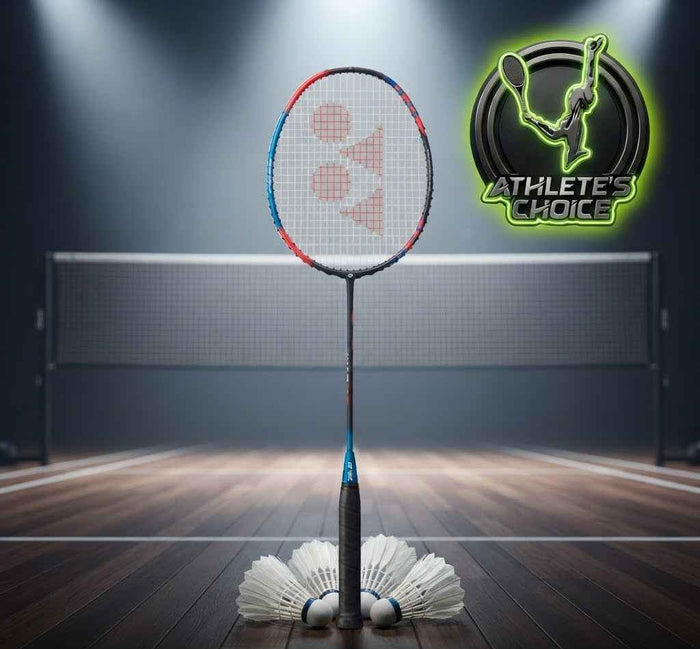
Yonex Astrox 7 Badminton Racket
Rs. 5,999.00

Yonex Astrox 100 Game VA Edition Badminton Racket
Rs. 9,100.00

Victor Auraspeed 100X Ultra Badminton Racket
Rs. 17,000.00
Still unsure? Try our guided finder and we will point you to a match.
Frequently asked questions
What weight badminton racket should a beginner use?
A 4U or 5U racket, about 75 to 84 grams, is easy to swing and is kind to the wrist while technique develops.
Is a head-heavy racket better for smashing?
Head-heavy rackets add momentum to overhead shots, which helps smashes and clears, but they are slower to move in defence.
Which grip size should I pick?
G4 is a common medium size. If you are between sizes choose the smaller one and add an overgrip if you need more thickness.
Do I need to string a new badminton racket?
Only if it is sold unstrung. Pre-strung rackets are ready to use, and you can restring later within the tension range printed on the frame.